


Five reasons to choose automatic forklift
With the rapid development of industrial automation, automatic forklifts have become a key tool for many companies to improve warehousing […]
With the rapid development of industrial automation, automatic forklifts have become a key tool for many companies to improve warehousing […]

This article explores the future development of Forklift Robots and their potential in smart warehousing. By integrating deeply with warehouse management systems, Forklift Robots will deliver more efficient, safer, and flexible automated warehouse management solutions.
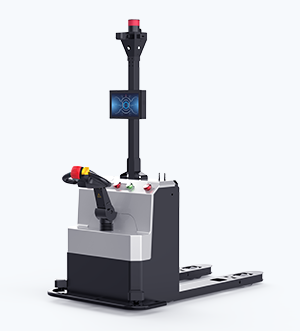
This article explores real-world applications of Forklift Robots in e-commerce warehousing and automotive manufacturing, showcasing their significant advantages in boosting efficiency, reducing costs, and enhancing flexibility. It helps businesses understand the practical benefits of Forklift Robots.
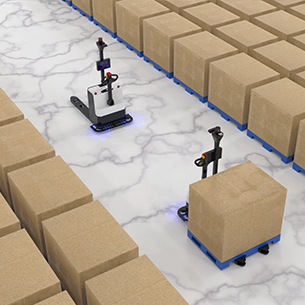
This guide provides a detailed step-by-step process for implementing Forklift Robots, covering warehouse needs assessment, equipment selection, testing, employee training, and ongoing maintenance. It helps businesses optimize Forklift Robot use to improve efficiency and reduce costs.

This article compares autonomous and traditional forklifts, highlighting the pros and cons of each for warehouse management. It covers efficiency, cost, safety, and use cases, helping businesses determine which option is best suited for their operations based on factors like warehouse size, material handling needs, and budget.

Autonomous forklifts, or unmanned forklifts, utilize technologies like automatic navigation, obstacle avoidance, and self-charging to enhance efficiency and safety in warehouses and factories. By reducing labor costs and minimizing errors, they significantly improve automation. Future trends include advanced sensors, AI integration, and expansion into new industries.
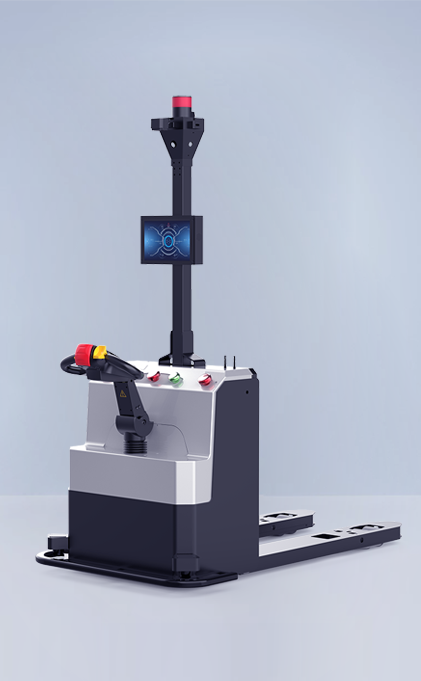
When choosing an **unmanned forklift**, businesses should focus on key factors such as the precision of automatic navigation, the sensitivity of obstacle avoidance systems, and the convenience of self-charging. Equally important are deployment flexibility, load capacity, system integration, after-sales support, and ROI to ensure the best fit for operational needs.

This article provides a comprehensive guide to choosing the right mobile robots for material handling in industrial and logistics sectors. Learn how to identify your specific needs, understand the different types of mobile robots—AGVs, AMRs, and autonomous forklifts—and evaluate technical support and ROI for optimal decision-making.

ReeMan Robotics implemented AMR robots to boost an adhesive tape manufacturer’s logistics efficiency, solving manual handling issues and enhancing production by 30%.

Reeman Robotics improved a factory’s handling efficiency by 30% with AMR robots. The solution addressed logistics challenges in an electronics company, boosting production efficiency and reducing employee workload.