

In the race to automate internal logistics, many factories are moving away from AGV forklifts and adopting AMR forklifts instead.
But why the shift?
At first glance, both look similar—they’re autonomous vehicles, they move pallets, and they promise labor savings. But under the hood, they’re fundamentally different. AMRs are smarter, more flexible, and better suited for dynamic environments. Here’s why facto
ries around the world are making the switch.
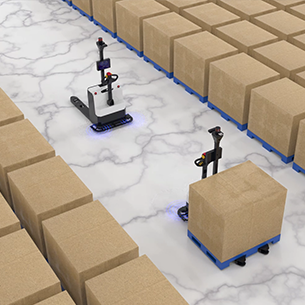
AGV Forklifts: Rigid but Reliable (Until the Layout Changes)
AGV (Automated Guided Vehicle) forklifts follow fixed routes. These are usually guided by:
-
Magnetic tapes
-
QR codes
-
Reflective markers
-
Wire-guided paths
They’re stable, accurate, and effective—as long as nothing changes.
But in real-world factories, things change all the time:
-
A new production line gets added
-
Storage racks are moved
-
Human workers block a path
-
Layouts shift for seasonal demand
For an AGV, any of these changes can cause failure or require a reprogrammed route. That’s downtime you can’t afford.
AMR Forklifts: Flexible, Smart, and Layout-Free
AMR (Autonomous Mobile Robot) forklifts use SLAM navigation (Simultaneous Localization and Mapping) with sensors like LiDAR, 3D cameras, and onboard computing. This gives them:
-
Real-time path planning
-
Dynamic obstacle avoidance
-
No need for markers, tapes, or fixed paths
-
Faster deployment in old or changing facilities
For example, Reeman’s AMR forklifts can be deployed in as little as 30 minutes, adapt to narrow aisles, and automatically replan paths around people or objects—making them ideal for small-batch, high-mix environments.
Key Differences at a Glance
| Feature | AGV Forklift | AMR Forklift |
|---|---|---|
| Navigation | Fixed route (tape, QR, wires) | SLAM + sensors (dynamic) |
| Obstacle Handling | Stops and waits | Avoids or reroutes |
| Layout Flexibility | Low – needs remapping | High – no physical changes needed |
| Setup Time | Weeks | Hours or less |
| Scalability | Hard to modify | Easy to expand or adjust |
| Cost over Time | High with frequent changes | Lower with dynamic needs |
Real-World Advantages of AMR Forklifts
Factories are choosing AMR forklifts because they:
-
Work in old buildings without layout modifications
-
Adapt to real-time obstacles like workers and trolleys
-
Reduce IT and integration overhead
-
Support smart logistics platforms for fleet coordination
-
Can ride elevators, making them suitable for multi-floor operations
These features aren’t just nice to have—they’re necessary in modern, fast-moving production and warehousing systems.
But Are AMR Forklifts More Expensive?
Not necessarily. While the initial price may be higher than AGV forklifts, the total cost of ownership (TCO) is often lower due to:
-
Less downtime
-
No need for floor markers or facility changes
-
Faster deployment
-
Reduced maintenance costs
-
Higher uptime with 24/7 operation and self-charging
Some vendors, like Reeman, even offer 15-day trial or return options, which lowers the risk of adoption.

The Bottom Line: AMR Forklifts Are the Future of Factory Logistics
In today’s flexible, fast-changing production environments, rigid AGV systems simply can’t keep up. AMR forklifts offer the intelligence, adaptability, and performance that factories need to stay competitive.
If you’re planning to upgrade your internal logistics, or if your AGVs often stop due to blocked paths or layout changes, it may be time to consider AMR forklifts instead.